
I still think about Bottega Veneta spring/summer 23
Are we defined more by what we wear, who we wear, or how we present ourselves to the world?

This is The Thread — a series at The Pull where I review collections that have shaped the industry, past and present. Let me know your thoughts in the comments below!
“Dressing brings us dignity, makes us human” — Matthieu Blazy
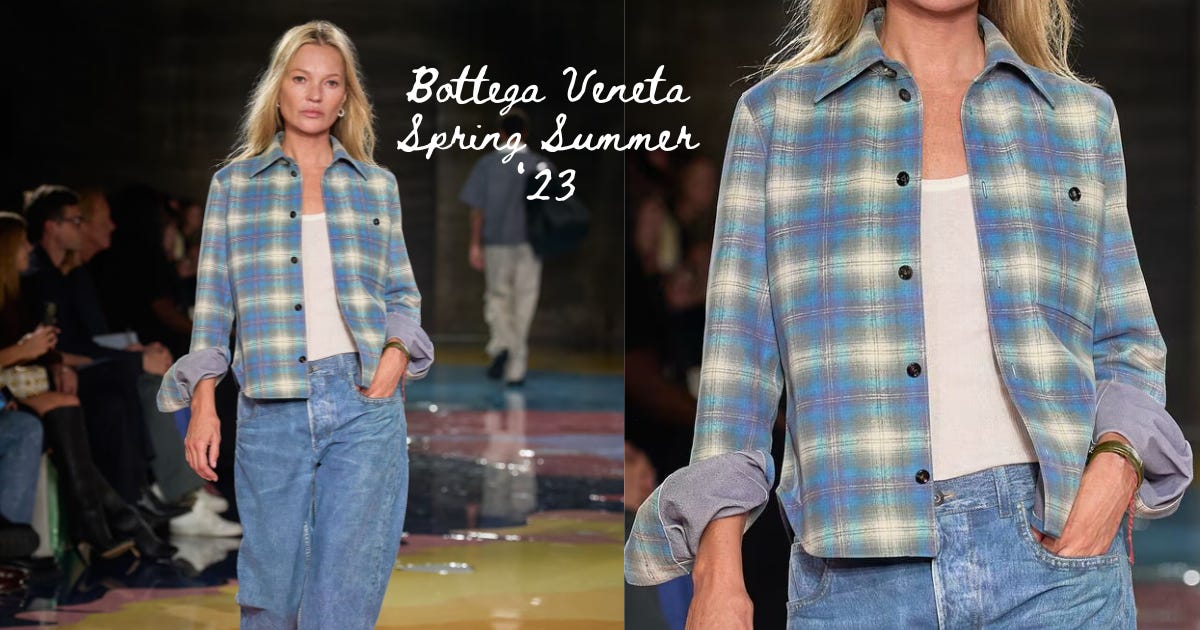
I’ve been thinking a lot about the concept of Normcore recently — a trend categorised by its familiarity in the mundane and defined by its unpretentious, anti-fashion style. You know the look: a flannelette shirt, a Nike hoodie paired with Adidas sneakers, socks with sandals. Practical, daily wear, though without any utilitarian purpose.
The term rose to prominence around 2014 and gained traction as a concept during COVID, when casual comfort was the only way to get through a day locked up at home. “It’s rather practical and no-nonsense, which to me, right now, seems sexy. I like the idea that one doesn’t need their clothes to make a statement,” said Jeremy Lewis for The Cut article, where the term was officially established. It’s a bit of a surprising sentiment to consider this way of dressing sexy, but 2014 was its own wavelength.
But what happens when your identity isn’t defined by how you dress? Is lack of individuality the price to pay? Or should identity be solely understood by its beholder rather than its audience? I think this is what Matthieu Blazy was getting at when presenting his spring/summer 23 ready-to-wear collection at Bottega Veneta.
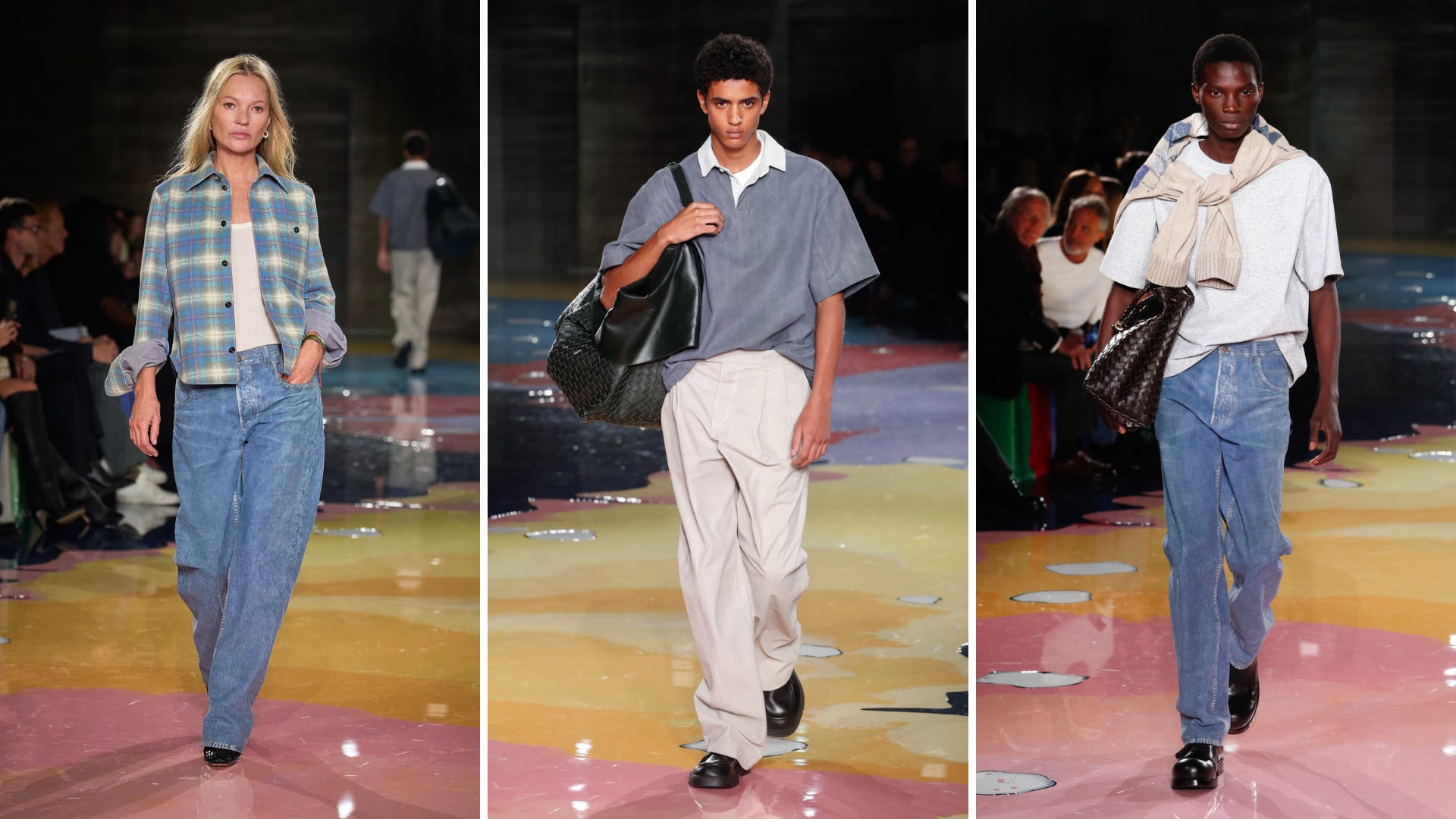
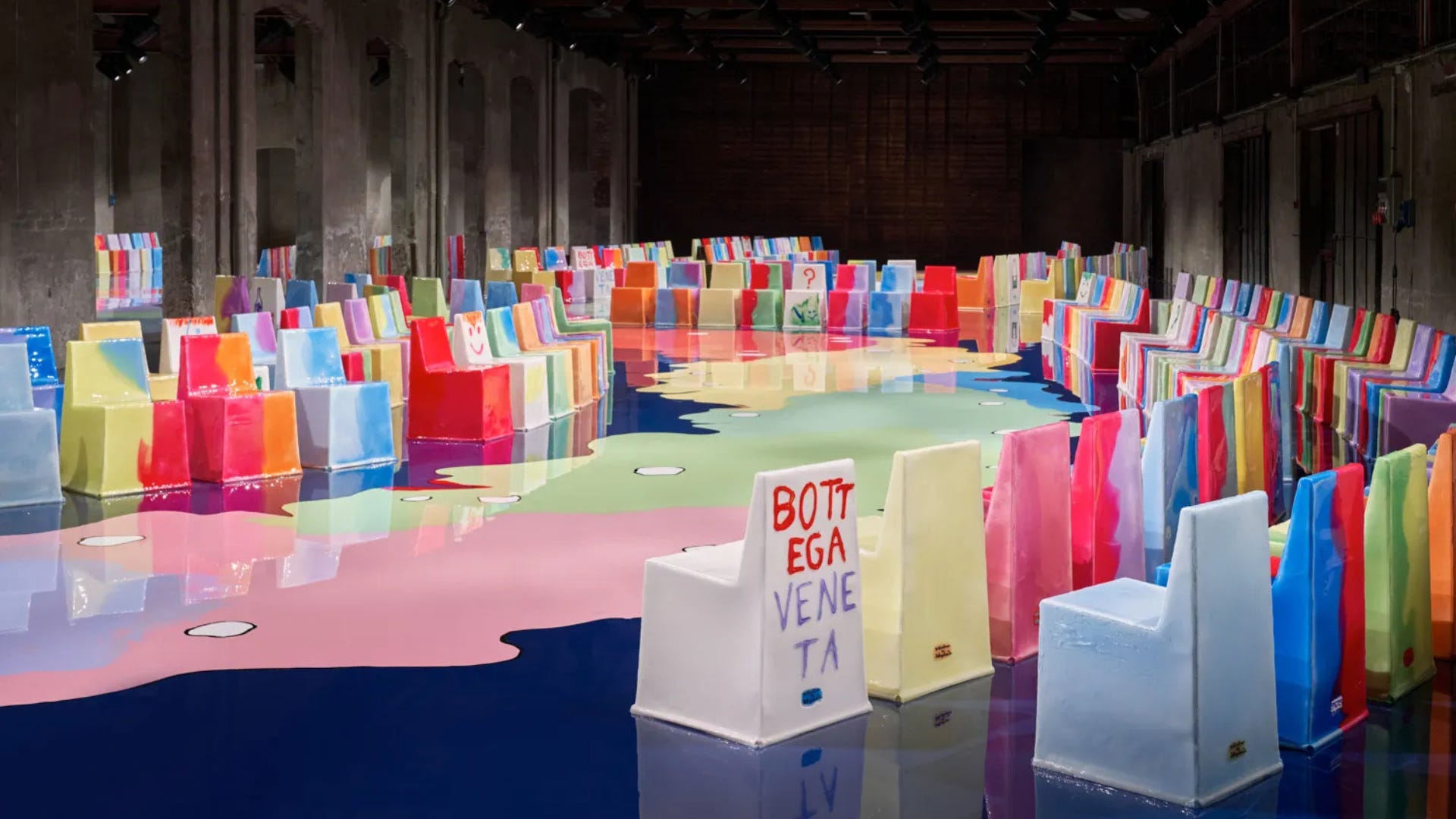
Blazy’s sophomore collection for Bottega Veneta was built around the concept of characters, presenting various archetypes through the lens of the heritage luxury house. The set, designed in collaboration with Italian architect and designer Gaetano Pesce, featured a brightly coloured poured-resin floor and 400 unique handmade chairs, occupied by the likes of Anna Wintour, Edward Enninful, Solange and Erykah Badu, among others.
Blazy expanded on his debut concept of establishing leather as his signature. This universe had a singular goal: a Bottega society where every person and every occasion was in a communal existence, all the same, regardless of the way one dressed. A relatively relatable concept, given the climate at the time. What weaved its society together, and where it differs from the mainstream, was the Italian craftsmanship and the house’s artisanal heritage, with a trompe-l’œil twist.
Take Kate Moss’s look, featuring a simple flannel shirt and jeans that was entirely rendered in leather. The flannel also required 12 layers of print to achieve precisely the colour Blazy wanted. Leather further took form in basic tees, argyle sweaters, leather denim shorts and trousers, the latter of which were originally seen in his debut collection. Other looks played with tweed, beading, and inventive takes on fringe, as well as patterns resembling the texture of a punch needle rug. There was precise tailoring of sculptural trench coats, button-downs, and boxy power suits. A dramatic fur coat was ironically rendered as a fox-fur print on goat’s hide, plus 3D slip dresses covered in blooms adhered to Blazy’s sculptural methodologies.
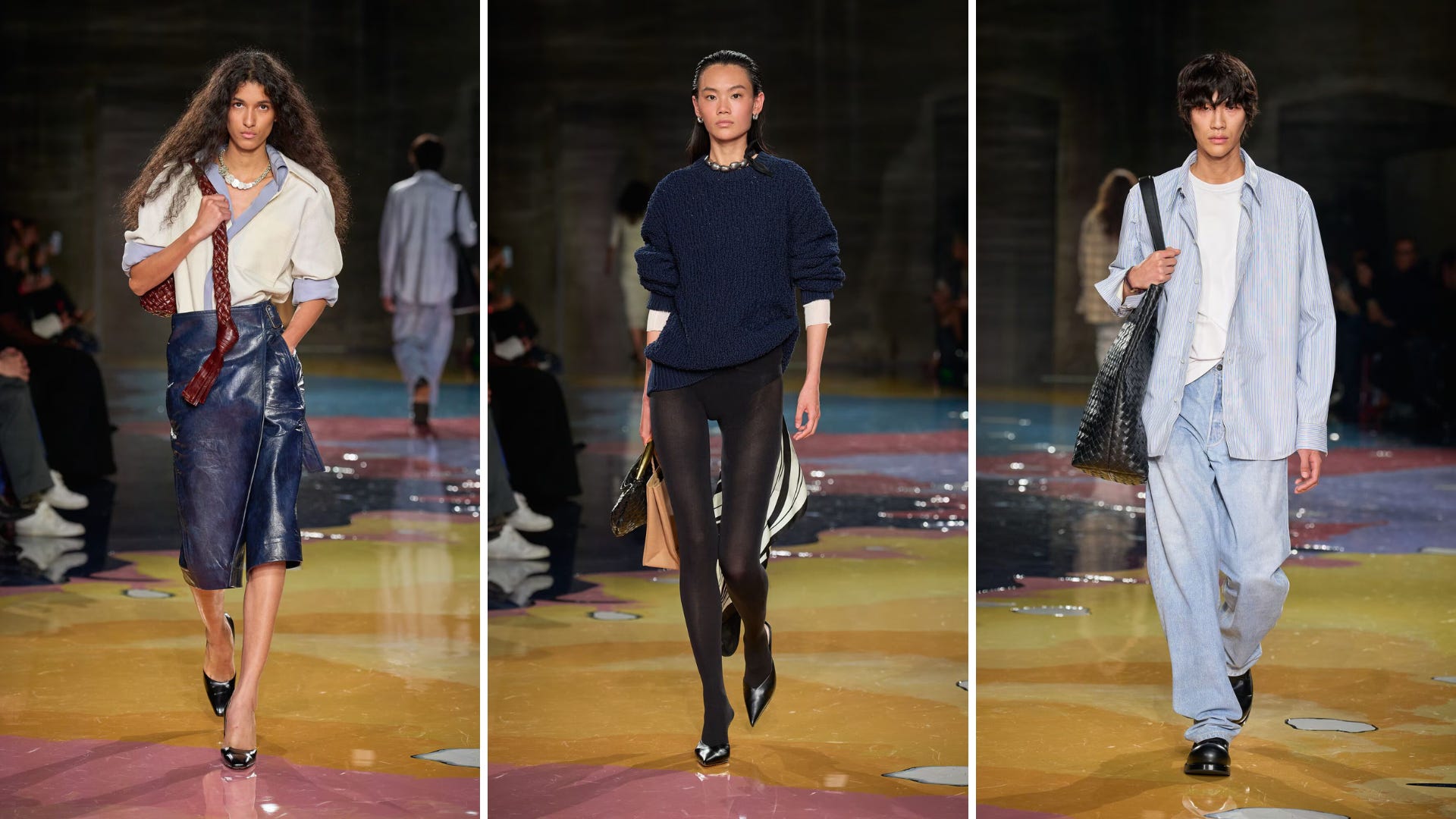
This careful construction of a unique new DNA for the house drew on his sartorial education from Raf Simons, Margiela, and Philo’s Céline, integrating intelligent craftsmanship to elevate the mundane into something remarkable and long-lasting. The multi-generational cast also reinforced diversity and universality, constructing a societal landscape that was both inclusive and expansive. Finally, there was an absence of a single Bottega logo. This an anonymity was a nod to ordinary dressing, or Normcore, if you will.
Though a nod to ordinary life, this collection was everything other. “From the perverse banality of the everyday nubuck looks, to the eroticism of ultra-sophistication through tailoring, via the look of the bourgeois left of the past, to the souvenirs worn by a globe-trotter… it’s like the world in a small room,” said Matthieu Blazy on the collection.
A person wearing what appears to be a pair of jeans and a checked shirt communicates almost nothing to the outside world about wealth, status, or belonging to any particular group. The garment rather confuses the audience, refusing to perform in the performative way clothes have always signalled. The identity has nothing to do with the audience, solely the beholder and how the clothes make them feel.
The deliberate refusal to build a single coherent visual identity across the collection confirms this idea that fashion is inherently personal. Blazy presented a room full of individuals who happened to all exist within the same world of quality, though the common thread is invisible to the outside observer. Gaetano Pesce articulated exactly this when he said of the 400 unique chairs which by definition, they could not be replicated or turned into content.
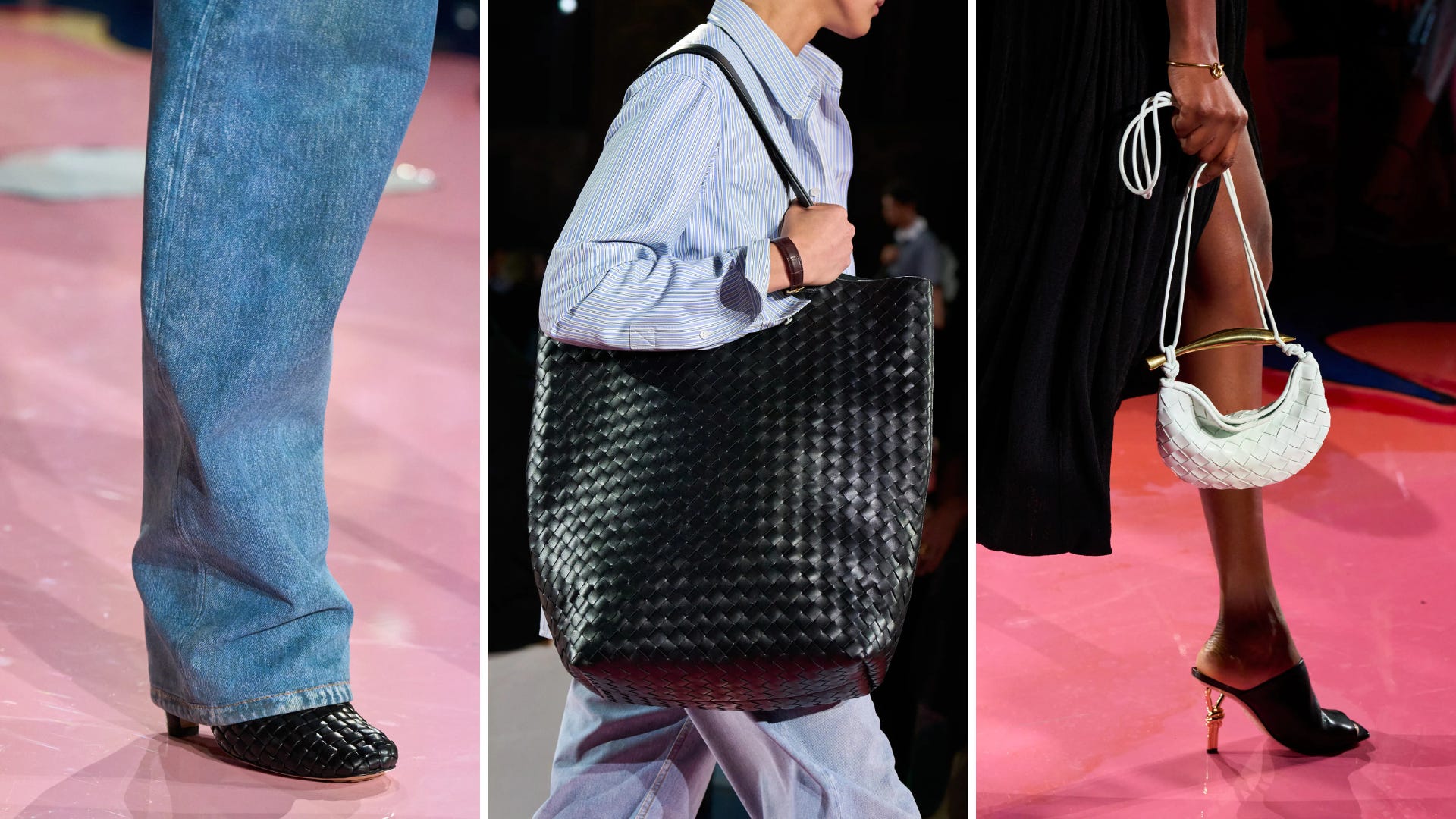
There is a counterargument to all this, however. Recent societal events of the early half of the decade — the pandemic, rising inflation, and the cost-of-living crisis — had thrust existing social inequities into the spotlight at the time. Blazy was making objects of extreme luxury look like ordinary, affordable things with its premium price tag. This could be seen as the wealthy putting on a costume, celebrating their own wealth by disguising it into the ordinary. There is something unsettling in spending thousands of euros on an object that look could look like a £30 flannel. It allows you to ask: is the value in the garment’s appearance, or in what they know about its making? Or, is it about personal values and identity over the facade of wealth?
The collection begs the overall question: are we defined more by what we wear, who we wear, or how we present ourselves to the world?
Rather than identity being confirmed first by the audience, Blazy proposes that it be felt first by the wearer. But overall, identity is defined by who we are when we wear the clothes that make us feel the most ourselves. “We are all different and this is our defining quality — otherwise, we are just a copy,” said Gaetano Pesce for V Magazine. “We are all originals.”
Literary Essentials: