
How literature became 2026’s most sought-after accessory
The aesthetic of intelligence.

This is The Pull — a serial, long-form deep dive into one topic that intersects fashion and culture. You can also browse my other (much shorter) verticals, The Thread and The Edit. Let me know your thoughts in the comments below!
“Upon opening the book, something shifted. And as she read, the room, eager to stay relevant, did too”
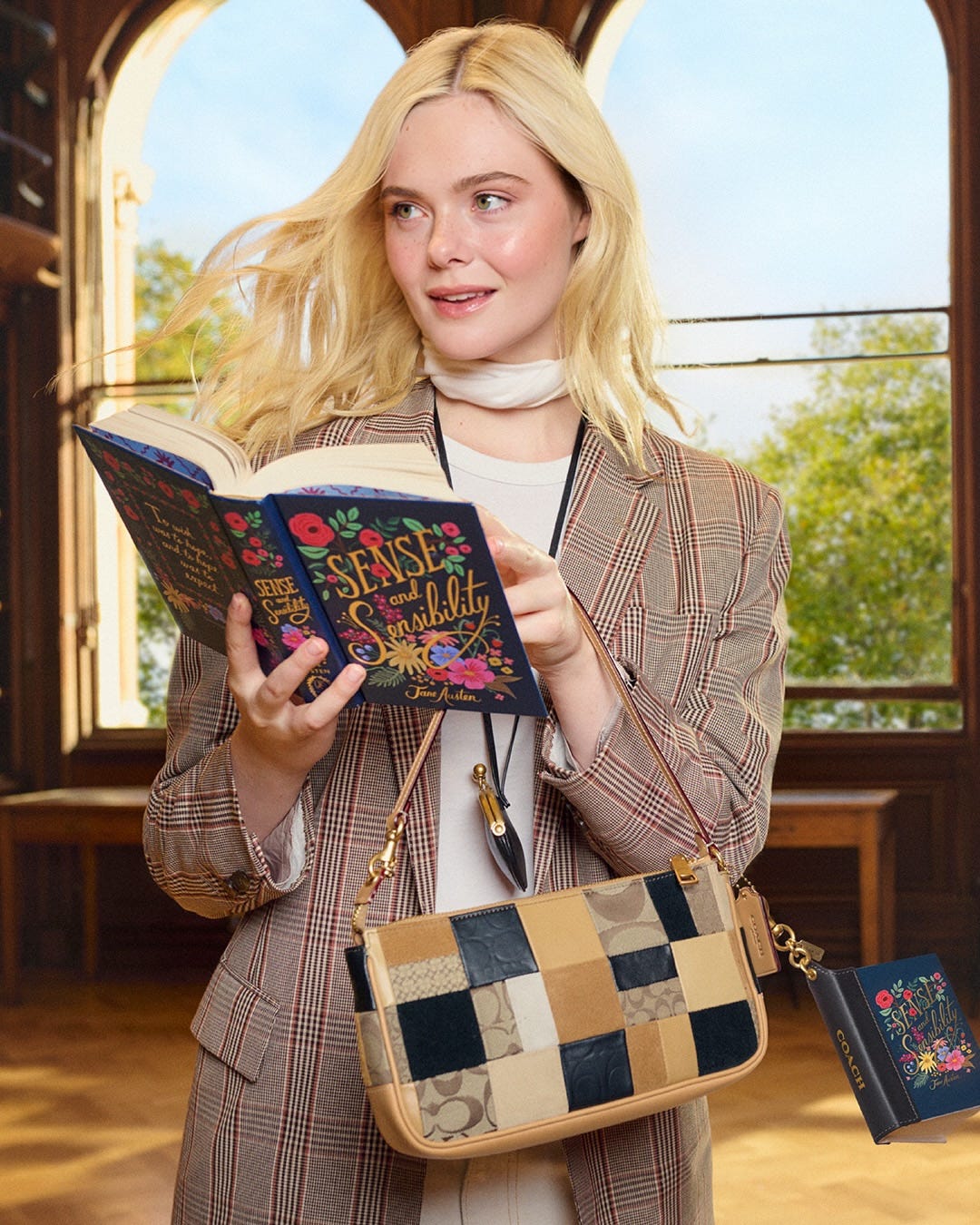
These words were uttered by Elle Fanning for Coach’s Spring 2026 “Explore Your Story” campaign, in collaboration with Penguin Random House. The campaign, which zeroed in on the idea that stories change how we see the world, was targeted at Gen Z to promote their readable book charms. It’s one of many recent moments combining fashion and literature in what seems to be the collaboration du jour for 2026.
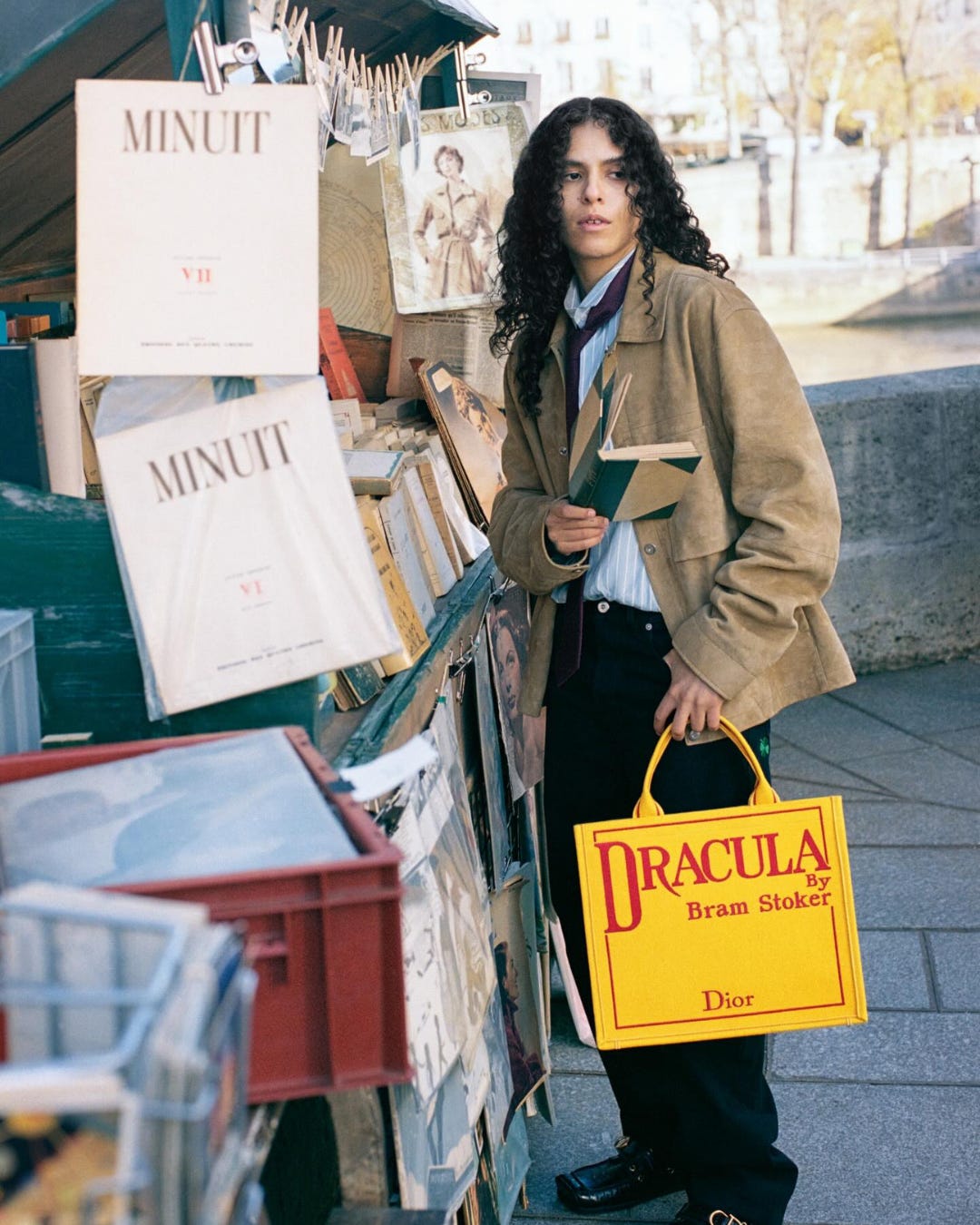
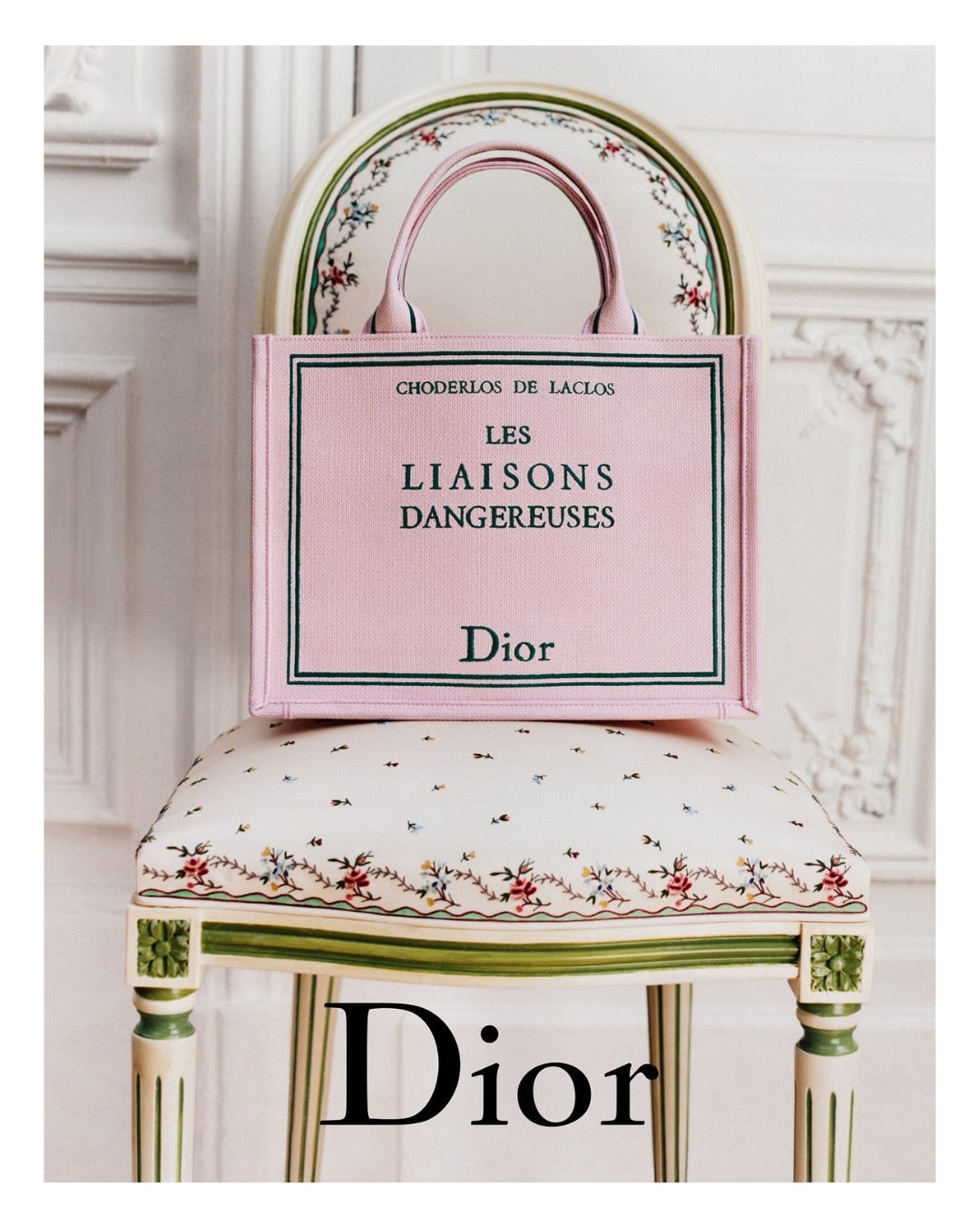
Earlier this year, Dior book totes landed in stores, which were introduced during Jonathan Anderson’s spring 2026 runway debut for the house. These totes were covered with prints of famous books like Madame Bovary and Dracula, crafted in cotton and retailing for about $5500 AUD for a medium size. Originally designed in 2018 by Maria Grazia Chiuri and worn at the time by every person with money in the Sydney CBD (and many fakes alongside to mark the illusion of wealth), Anderson’s recent interpretation took a more literal approach to the bag’s iconic name.
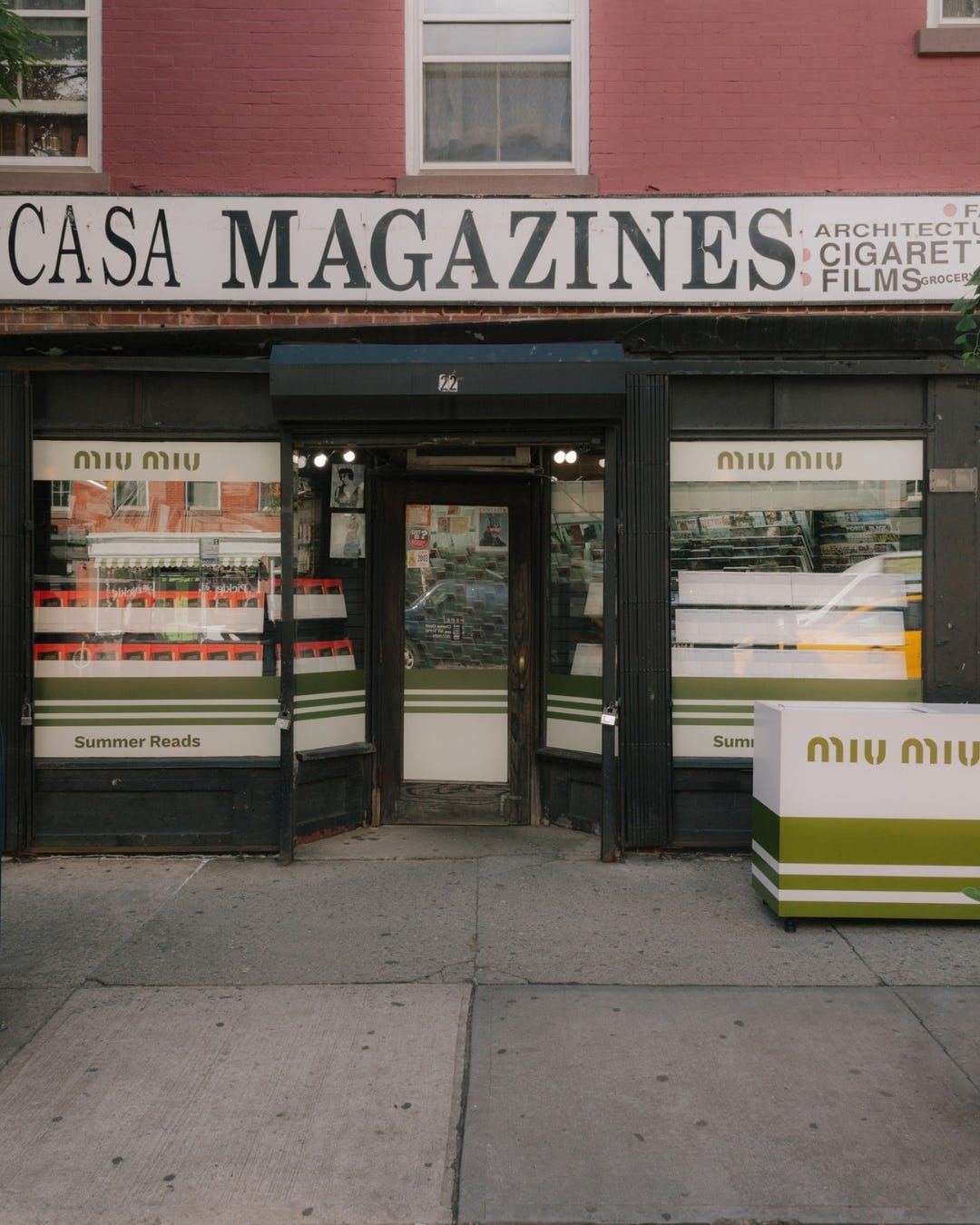
But it’s not just a sartorial trend, either. A noticeable thread weaving through these recent fashion moments is the use of literature to confer prestige and cultural authority. Consider Miu Miu and its peripatetic “Miu Miu Reads” gatherings, a public event where visitors were gifted copies of two literary classics selected by the brand. In 2024, Valentino sponsored the 2024 Booker Prize, elevating its brand through association with celebrated writers and critical acclaim. The prestige of literature is leveraged by Saint Laurent’s Left Bank bookstore in Paris, curated by Anthony Vaccarello and fostering an aura of elevated, intellectual chic that stands apart from your usual Dymocks run.
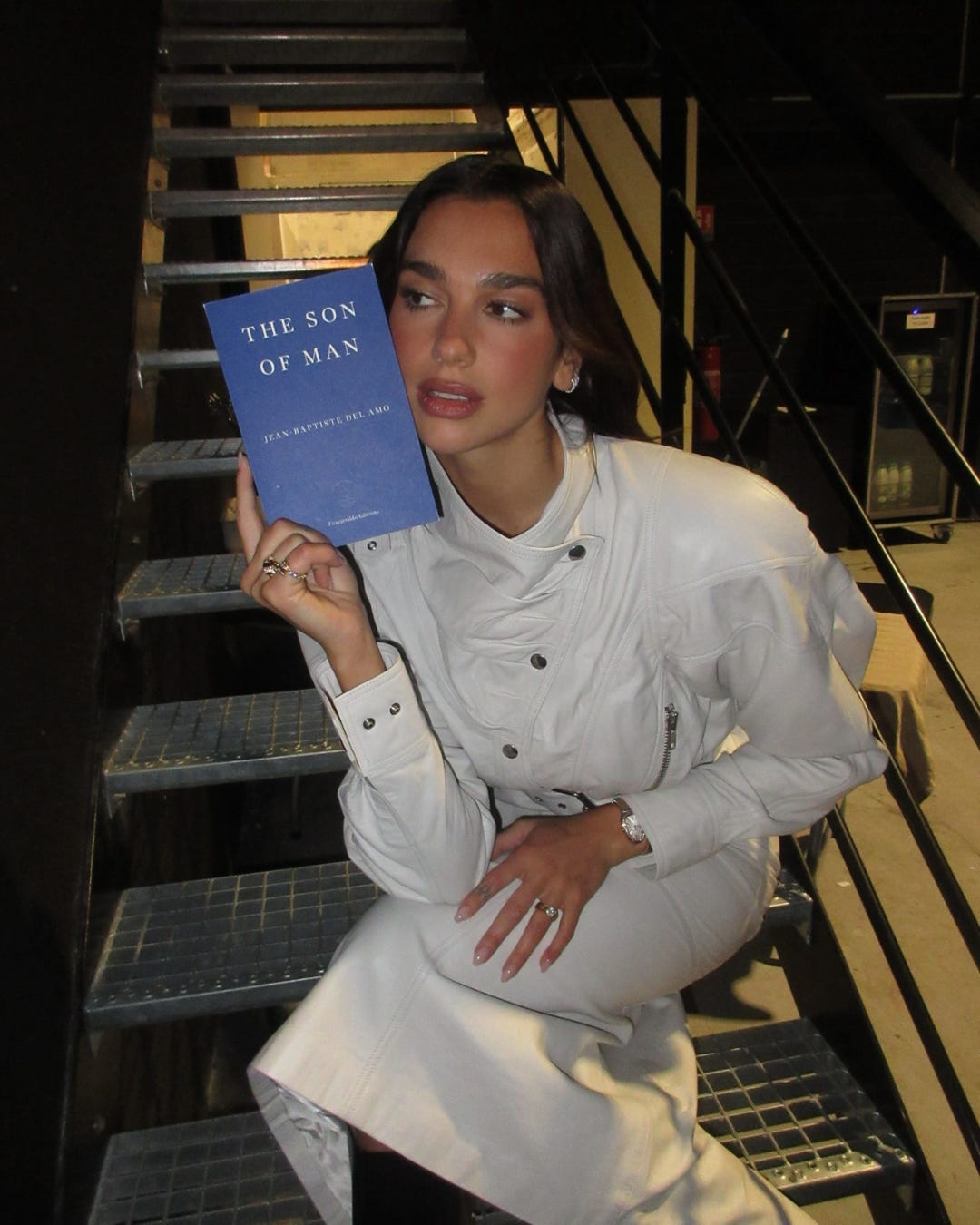
And online, literary intelligence is also making a significant impact. My first thought is of the ‘performative male’ TikTok archetype — a man who reads Sylvia Plath’s The Bell Jar and other female-led novels as a way to get girls. Dua Lipa has also become a certified literary It-Girl, interviewing eminent writers including Olga Tokarczuk, Margaret Atwood, and Michelle Zauner.
This amalgamation of fashion, culture and literature is not a new concept in the slightest. However, as this visual exploration of fashion and literature plays out on runways and Instagram feeds, Australians are reading less than ever before. A 2024 Deakin University study of 13,217 Australian secondary students found that 29% of teens do not read for pleasure, with many preferring social media and video content in their spare time. A report by the European and International Book Federation in 2024 found that only 64% of Australians bought a book in the past year, compared with an average of 72% across 19 countries. So why is it that $5500 totes and literary accessories thrive at a moment when actual readership is slipping away?
But perhaps it’s not about books at all. If we go back to Jonathan Anderson’s book bags, there has been speculation about what Anderson intended to use these specific books for. Commenting on the inclusion of Bram Stoker’s Dracula, Susie Lau noted that the novel centres on Victorian anxieties about immigration — an idea that feels especially relevant given current events in both America and the UK. She suggests that Anderson may be using these selections as a form of social commentary.
This trend in literature also aligns well with the desire to log off and lead a more offline life. I find this recent intersection amusing because it is clear that we are longing for this analogue mode of language (despite criticism of the trend itself being performative), yet, as a culture so visual, we choose to siphon the emotional capacity of the written word and expel it into a visual mode of consumption. Is this a modern way of pleasing the masses by making language easier to digest? Or is this fashion’s way of bridging an ever-crumbling gap between the two arts, to remind us that literature is, above all, one of the most singular points of self-expression?
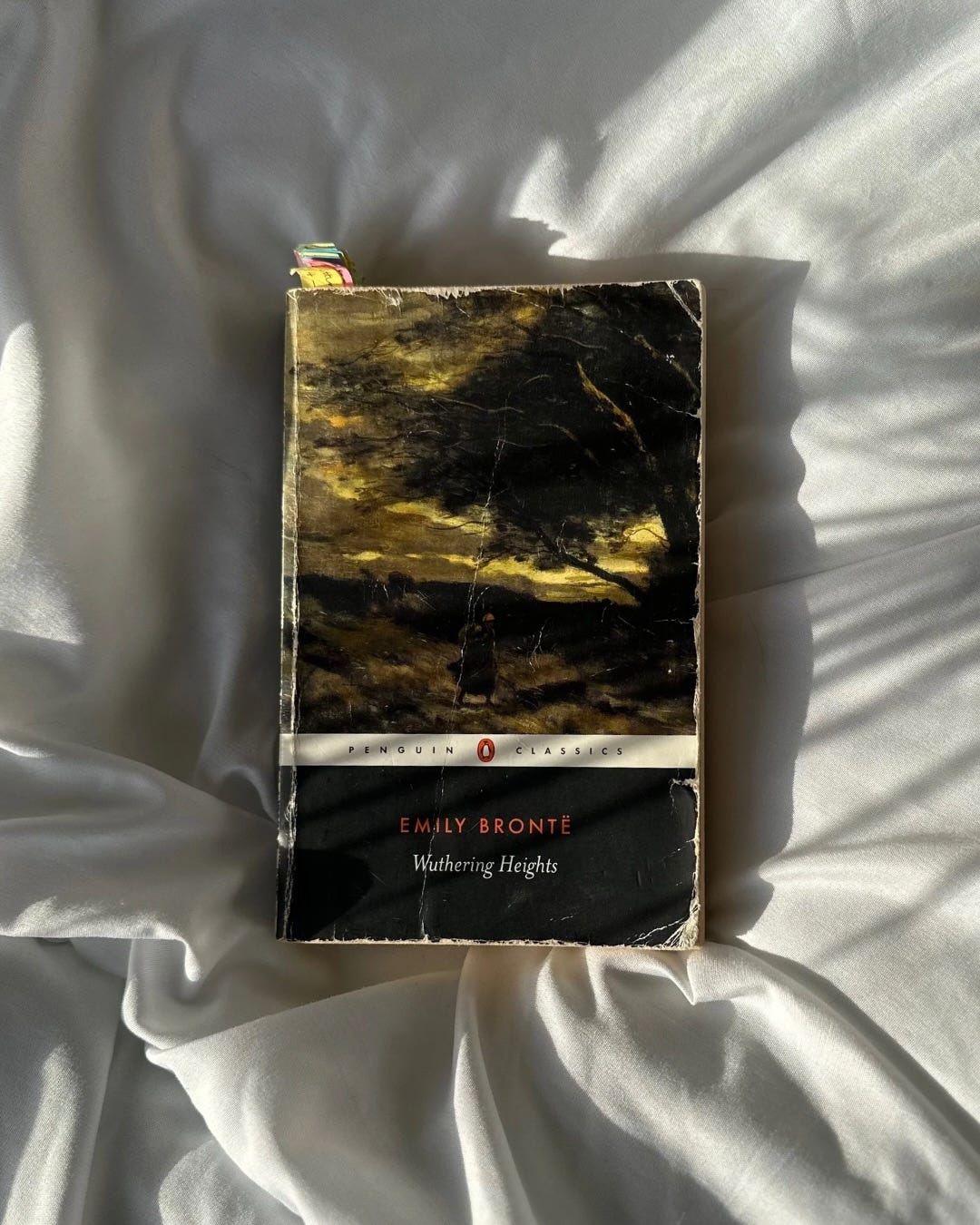
I guess it’s the same conversation that surrounds Emerald Fennell’s bold adaptation of Wuthering Heights that was released this month. Fennell has repeatedly said that this specific adaptation, which transformed the gothic novel into an unrequited love story (played by two Queenslanders) and turned obsession into yearning, came from her experience reading the novel at just fourteen. Her visual interpretation of Emily Brontë’s novel is just as valid as Charli XCX’s interpretation through her album, as is Kate Bush’s, Andrea Arnold’s, Peter Kosminsky’s, and the National Theatre’s. It reads more about the culture now than about Brontë’s original work. When you are inspired by a character or a piece of work, you get a sense of who the interpreter is and what their beliefs are.
Perhaps people don’t have a fascination with literature at all, but with the past. In particular, there is a renewed longing for the aesthetics and mood of the late 1990s and early 2000s: a period defined by its pre-digital optimism, minimalist fashion, and cultural transition into a new era. Nostalgia is currently playing a big role in how we create and curate art — it’s our own little way of practising escapism. While I adore it when fashion designers and artists use literature as a portal into their own worlds, this trend is more about how we, as a culture, are handling our reality than about the individual artists themselves.
Perhaps every one of us is a little bit of a performative male in this instance. But books are books, whether you’re performing intelligence or are actually reading. And if you’re feeling lost, or a piece of fashion inspired by literature speaks to you, then pick up the book — you might find a piece of yourself there.
Literary Essentials:
Nostalgia is such an important currency in this world we now live in. Love how you connected it to literature and style.
this is something I have noticed for a while too. unfortunately, I don't think literary pieces used in fashion are because designers want to remind the world how important self expression in writing is. I feel like it's more because in a world where everyone is always online and scrolling on the internet, being offline is considered new, exciting and cool. and being offline is associated with reading books. what better way to signal the people around you that you are cool and intelligent than wearing something like the book charm or wearing the Dracula Dior handbag?